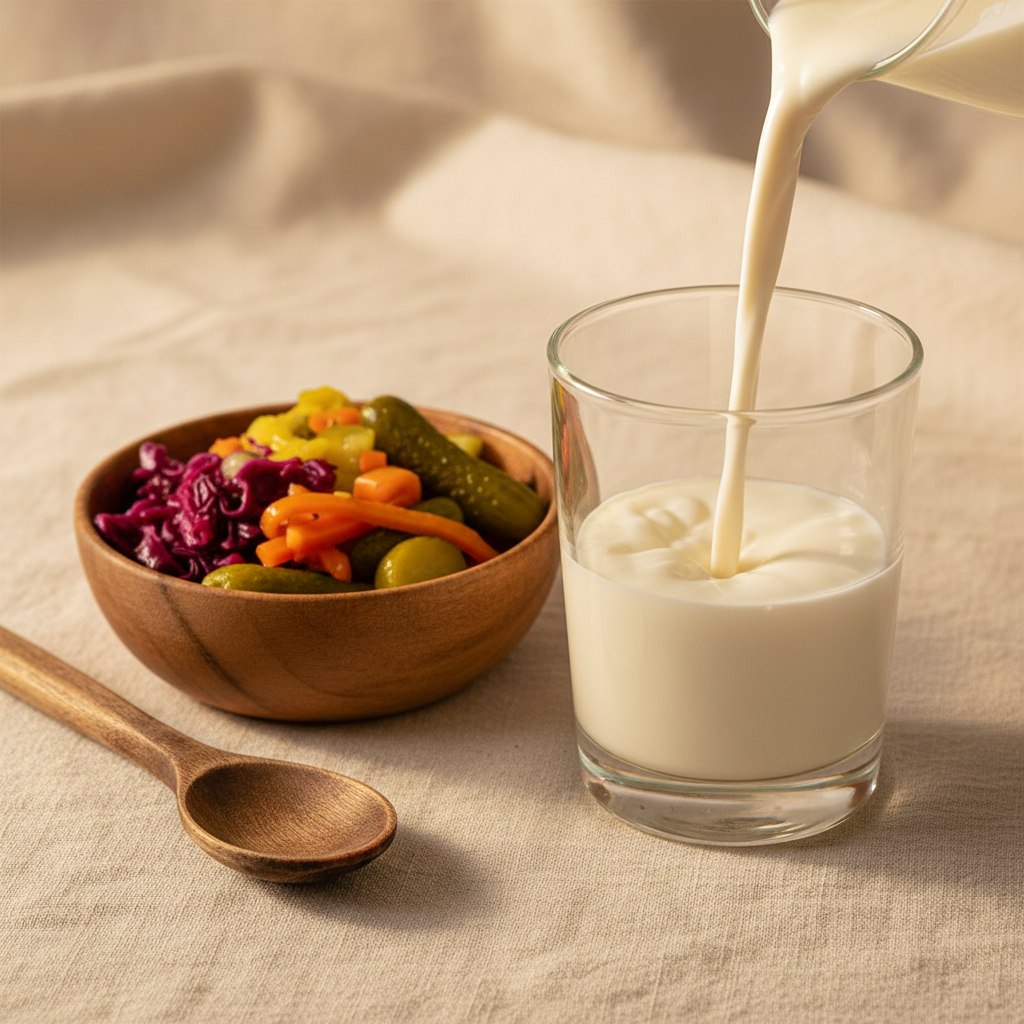
What Are Postbiotics? Probiotics vs Prebiotics, Explained
Postbiotics are the compounds your gut bacteria produce after digesting prebiotic fibre. The science, the studies, and whether a supplement is worth it.

Most people know what probiotics are. The live bacteria, sold by the billions of colony forming units, marketed for everything from bloating to mood. Fewer have heard of prebiotics, the dietary fibres that feed those bacteria. And almost no one talks about postbiotics, even though they are arguably the most important of the three.
Postbiotics are the compounds your gut bacteria produce when they digest prebiotic fibre. They are the metabolic byproducts of fermentation: short chain fatty acids, lactate, polyphenol derivatives, bacterial cell wall fragments, and signalling molecules that travel from your gut into the rest of your body. They are the actual molecules doing the work that probiotics get credit for.
This piece covers the why. The twelve week Probiotic Protocol turns it into the plan, using fibre, fermented food and targeted strains to rebuild postbiotic production from the ground up. Unlock it free.
What Are Postbiotics? The Short Definition
Postbiotics are the bioactive compounds produced when beneficial gut bacteria ferment prebiotic fibre, including short chain fatty acids (butyrate, propionate, acetate), lactate, exopolysaccharides, and bacterial cell components that signal to your immune and metabolic systems. The 2021 International Scientific Association for Probiotics and Prebiotics consensus statement in Nature Reviews Gastroenterology defined a postbiotic formally as “a preparation of inanimate microorganisms and/or their components that confers a health benefit on the host.”
The term sounds like marketing language, but the science is real. Postbiotics include both the metabolic outputs of live bacteria and inactivated bacterial cells themselves, sometimes called paraprobiotics. What unites them is that they exert biological effects without needing to be alive. That distinction matters because it changes how you think about supplementation, and how you interpret the best probiotic products for women actually do their job once swallowed.
Probiotics vs Prebiotics vs Postbiotics: What Each One Does
Probiotics are live beneficial bacteria; prebiotics are the fibres that feed them; postbiotics are what those bacteria produce in return. Think of it as input, organism, and output. You eat the fibre (prebiotic), your bacteria (probiotic) digest it through fermentation, and the resulting compounds (postbiotic) act on your gut lining, immune cells and brain.
The practical implication is uncomfortable for the supplement industry: a probiotic capsule is only useful to the extent that the strains survive transit, colonise, and produce postbiotics in your specific gut environment. This is why some highly marketed probiotic products show modest results in trials. The strain may be alive on the label but produce little of value once it reaches the colon. Studies on Akkermansia muciniphila showed something unusual here: the pasteurised (heat killed) form outperformed the live form, because the benefit came from a specific protein on the bacterial cell wall, not from live metabolic activity. The postbiotic was doing the work.
What Does Butyrate Actually Do?
Butyrate is the most studied postbiotic and the primary fuel source for the cells lining your colon. A foundational 1980 Lancet paper by Roediger established that colonic cells derive 60 to 70% of their energy directly from butyrate, not from glucose like most cells in the body. When butyrate is depleted, the colonic lining starts to atrophy and barrier function fails, which is one of the mechanisms behind leaky gut.
Butyrate does more than feed cells. A 2013 Nature paper by Furusawa and colleagues showed that butyrate induces colonic regulatory T cells, the immune cells that calm chronic inflammation. This is the mechanism behind the consistent finding that low butyrate producing bacteria are associated with inflammatory bowel disease, type 2 diabetes, and obesity related metabolic dysfunction. A 2008 review in Alimentary Pharmacology and Therapeutics by Hamer and colleagues covered the clinical applications, noting that butyrate enemas have measurable effects on ulcerative colitis remission.
The bacteria that produce the most butyrate are Faecalibacterium prausnitzii, Roseburia intestinalis, and several Clostridium clusters. These are all fibre dependent. Without prebiotic fibre (inulin, resistant starch, beta glucan from oats), butyrate production drops within days. That is why feeding the bacteria matters more than swallowing them.
Should You Take a Postbiotic Supplement?
For most people, eating fibre and fermented food produces more postbiotics than any supplement can deliver, but a butyrate supplement makes sense in specific cases: confirmed low butyrate producers on a stool test, inflammatory gut conditions, or rebuilding after a course of antibiotics. The product with the strongest functional medicine track record is BodyBio Butyrate, a sodium free blend of calcium and magnesium butyrate dosed at two to six capsules daily with meals.
Shop BodyBioWhat to avoid: products labelled “postbiotic” that turn out to be heat killed probiotics with no characterisation of which compounds remain, or supplements that combine butyrate with vague proprietary blends. The evidence base is strongest for direct butyrate, or for tributyrin, a slower releasing precursor, at characterised doses. Reading a probiotic or postbiotic label well, knowing which strain claims are meaningful and which are decorative, is a category we walk through in the book.
Other targeted postbiotics with emerging evidence include heat killed Lactobacillus strains (paraprobiotics) for immune modulation and exopolysaccharides for gut barrier support. The clinical literature on these is much thinner than the literature on butyrate. If you are starting one postbiotic supplement based on the strength of evidence, butyrate is the right call.
How to Increase Postbiotics Naturally
Postbiotic production depends on two things: the diversity of your gut bacteria and the volume of prebiotic fibre you feed them. The general principle from the thirty plants a week approach to gut health applies directly. Aim for thirty different plants per week and at least one fermented food daily.
The most effective dietary interventions:
- Soluble fibre and resistant starch: oats, cooked then cooled potatoes and rice, green bananas, lentils, beans. These feed the bacteria that produce butyrate.
- Inulin rich foods: chicory, Jerusalem artichoke, garlic, onion, leek, asparagus. Selectively support Faecalibacterium and Bifidobacterium populations, which are the main butyrate producers.
- Fermented foods: kombucha, sauerkraut, kimchi, kefir, miso, live yoghurt. Deliver direct postbiotics alongside live cultures.
- Polyphenol rich foods: berries, cocoa, green tea, olive oil. Bacterial metabolism converts polyphenols into a separate class of postbiotic compounds with measurable effects on systemic inflammation.
Avoid the things that suppress postbiotic production: ultra processed food, frequent antibiotics, chronic alcohol intake, and ultra low fibre diets. If you have rebuilt fibre and fermented food intake and your symptoms persist, that is the point at which a targeted supplement starts to make sense.
What the Evidence Actually Shows
Postbiotic science is moving fast, but the conclusions worth taking seriously are narrower than the marketing suggests.
Established (multiple human RCTs and consistent mechanism):
- Butyrate is the primary fuel for colonic cells and is essential for barrier function
- Short chain fatty acids modulate immune regulatory cells and reduce systemic inflammation
- Dietary fibre is the rate limiting input for postbiotic production
- Fermented food consumption is associated with measurable shifts in inflammatory markers
Emerging (promising mechanism, mixed or limited human data):
- Whether direct butyrate supplementation in capsule form produces the same downstream effects as butyrate produced inside the colon
- The role of heat killed bacterial cells (paraprobiotics) for immune signalling
- Whether targeting specific postbiotic compounds can substitute for broader dietary fibre intake
The honest position: postbiotics are real, the science is interesting, and the dietary interventions that produce them (fibre, fermented food, polyphenols) are independently beneficial regardless of what the supplement industry decides to call them next.
If your gut has been through a rough patch, antibiotics, a long stretch of processed food, chronic stress, the work is the same: feed the bacteria that produce postbiotics rather than chase each compound on its own. The dietary base does more than any capsule. The supplement, if you choose to use one, is the last lever, not the first.
This article is for informational purposes and does not replace professional medical advice. If you have a chronic gut condition, consult a healthcare provider.
Frequently Asked Questions About Postbiotics
What is the difference between probiotics, prebiotics and postbiotics?
Probiotics are live beneficial bacteria, typically Lactobacillus and Bifidobacterium species, that you take as a supplement or get from fermented food. Prebiotics are the dietary fibres that feed those bacteria, including inulin, resistant starch and beta glucan. Postbiotics are the compounds produced when the bacteria digest the fibre, including short chain fatty acids (butyrate, propionate, acetate), lactate, and bacterial cell fragments that signal to your immune system.
What are the main benefits of postbiotics?
Postbiotics fuel the cells lining your colon, regulate inflammation through immune signalling, strengthen the gut barrier, and influence metabolic markers including insulin sensitivity and cholesterol. Butyrate provides 60 to 70% of the energy used by colonic cells per a foundational 1980 Lancet study. A 2013 Nature paper showed butyrate induces regulatory T cells that calm chronic inflammation, which is the mechanism behind its protective role in inflammatory bowel disease.
Is butyrate a postbiotic?
Yes. Butyrate is a short chain fatty acid produced when beneficial gut bacteria ferment prebiotic fibre, making it the most studied example of a postbiotic. It is the primary fuel source for colonic cells, and depleted butyrate levels are consistently associated with inflammatory bowel disease, type 2 diabetes, and gut barrier dysfunction across population studies.
Can you take postbiotics as a supplement?
Yes, and direct butyrate supplements have the strongest evidence base. BodyBio Butyrate is the product most cited in functional medicine, using a sodium free blend of calcium and magnesium butyrate at two to six capsules daily. Heat killed probiotic strains (paraprobiotics) are also commercially available but the evidence is thinner. For most people, eating thirty plant foods per week and one fermented food daily produces more postbiotics than any supplement can deliver.
Frequently Asked Questions
What is the difference between probiotics, prebiotics and postbiotics?
Probiotics are live beneficial bacteria, typically Lactobacillus and Bifidobacterium species, that you take as a supplement or get from fermented food. Prebiotics are the dietary fibres that feed those bacteria, including inulin, resistant starch and beta glucan. Postbiotics are the compounds produced when the bacteria digest the fibre, including short chain fatty acids (butyrate, propionate, acetate), lactate, and bacterial cell fragments that signal to your immune system.
What are the main benefits of postbiotics?
Postbiotics fuel the cells lining your colon, regulate inflammation through immune signalling, strengthen the gut barrier, and influence metabolic markers including insulin sensitivity. Butyrate, the most studied postbiotic, provides 60 to 70% of the energy used by colonic cells per a foundational 1980 Lancet study. A 2013 Nature paper showed butyrate induces regulatory T cells that calm chronic inflammation, which is the mechanism behind its protective role in inflammatory bowel disease.
Is butyrate a postbiotic?
Yes. Butyrate is a short chain fatty acid produced when beneficial gut bacteria ferment prebiotic fibre, making it the most studied example of a postbiotic. It is the primary fuel source for colonic cells, and depleted butyrate levels are associated with inflammatory bowel disease, type 2 diabetes, and gut barrier dysfunction.
Can you take postbiotics as a supplement?
Yes, and direct butyrate supplements have the strongest evidence base. BodyBio Butyrate is the product most cited in functional medicine, using a sodium free blend of calcium and magnesium butyrate at two to six capsules daily. Heat killed probiotic strains (paraprobiotics) are also commercially available but the evidence is thinner. For most people, eating thirty plant foods per week and one fermented food daily produces more postbiotics than any supplement can deliver.
How to Read Wellness
The book that taught us how to read every supplement label, clinical trial, and viral wellness claim. £24 paperback, printed to order.
Buy the bookProducts mentioned in this guide
Affiliate Disclosure
Some links in this guide are affiliate links, if you buy something we recommend, Sable + Sand may earn a small commission at no cost to you. We only recommend products we would genuinely use, and all editorial decisions remain entirely independent.