Does Castor Oil Actually Work? An Honest Look at the Viral Wellness Trend
Castor oil packs, hair growth, hormone balance, liver detox. We sort the genuine evidence from the TikTok folklore, claim by claim.
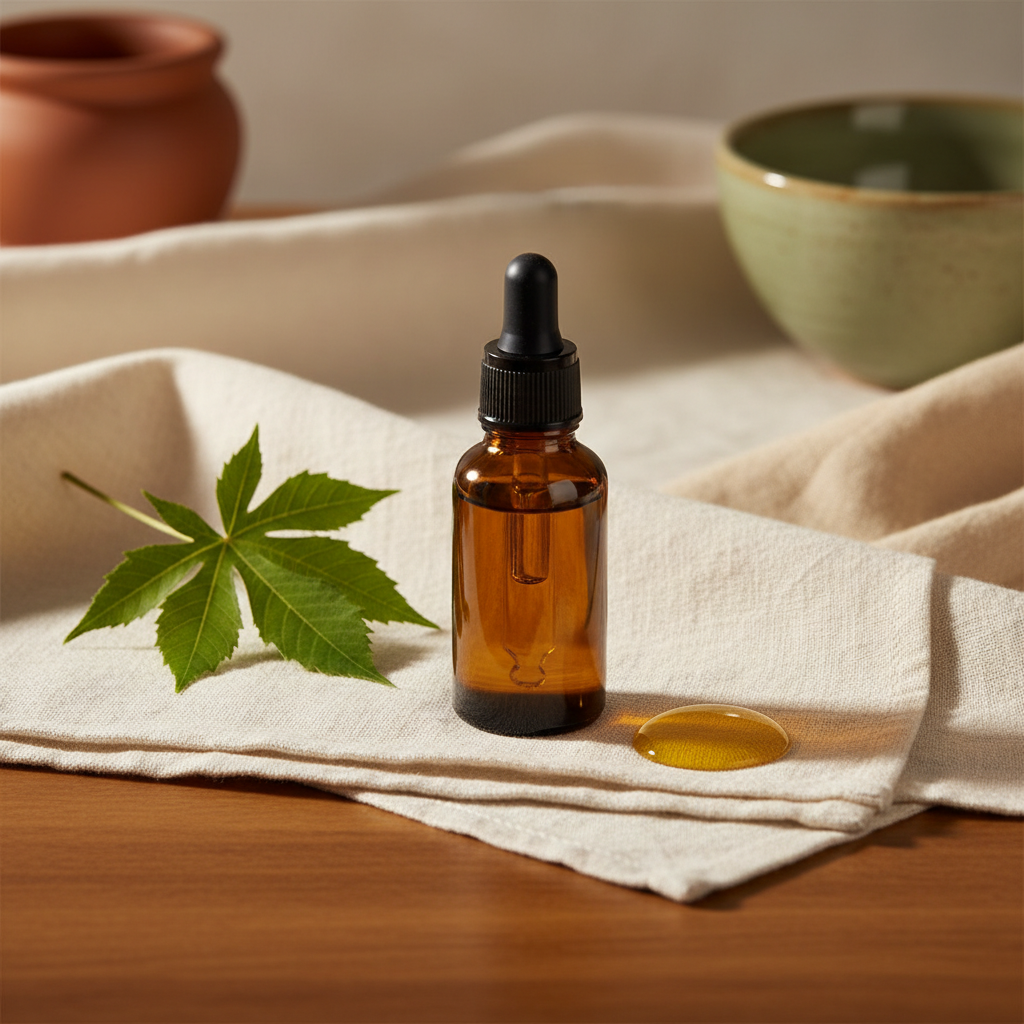
Castor oil has been on every wellness feed for the last two years. Sticky, golden, slightly medicinal smelling, sold in small amber bottles for a few pounds. The claims around it are extraordinary: it detoxes the liver, balances hormones, shrinks fibroids, regrows hair, eases period pain. The evidence behind those claims ranges from solid to absent, depending on which one you mean.
This guide rates the evidence claim by claim, names what the research actually shows, and tells you where the line sits between traditional remedy and TikTok folklore. We have done the same job for tallow cream and for the GHK Cu peptide; this is the castor oil version.
What Is Castor Oil and How Is It Traditionally Used?
Castor oil is a thick vegetable oil cold pressed from the seeds of the Ricinus communis plant, used in skincare and folk medicine for over four thousand years. The seeds themselves are highly toxic (they contain ricin), but the cold pressing process leaves the oil safe for topical use. Its single most distinctive component is ricinoleic acid, an unusual omega 9 fatty acid that makes up around 90% of the oil and is responsible for most of its biological activity.
Traditionally castor oil has three uses: topically as a thick emollient on dry skin and scars; in castor oil packs, where the oil is soaked into cotton fabric and laid over the abdomen with a heat source on top; and internally as a powerful stimulant laxative, a use largely abandoned in modern medicine because gentler alternatives exist. The current wellness revival is almost entirely focused on the topical and pack uses.
Do Castor Oil Packs Actually Detox the Liver?
No. Castor oil packs do not detox the liver. The body has its own detoxification system, primarily the liver, kidneys, lymphatics, and gut, and that system does not require a topical oil to function. There is no published peer reviewed evidence that ricinoleic acid is absorbed through the skin in any meaningful quantity, and certainly none that it travels to the liver and binds toxins for excretion.
What castor oil packs may genuinely do is two things, neither of which is a liver detox. Ricinoleic acid has documented topical anti inflammatory action at the application site, a real local effect on the skin and superficial tissue. And the ritual itself (lying still for an hour with a warm pack, away from your phone) lowers cortisol and shifts the nervous system into the parasympathetic state that supports digestion and recovery. People feel better afterwards because they have rested, not because they have detoxed. If you actually want to support liver function with something the evidence backs, our TUDCA liver guide walks through the bile acid that has been studied for liver support in published trials.
Does Castor Oil Grow Hair, Eyebrows, and Lashes?
There is no human clinical trial demonstrating that castor oil grows hair, eyebrows, or eyelashes. The claim rests on a single in vitro paper suggesting ricinoleic acid may inhibit prostaglandin D2, a molecule implicated in androgenetic hair loss. In vitro means in a dish, not in a person. The leap from “may inhibit a molecule in cell culture” to “regrows your eyebrows” is enormous, and no follow up trial in humans has bridged it.
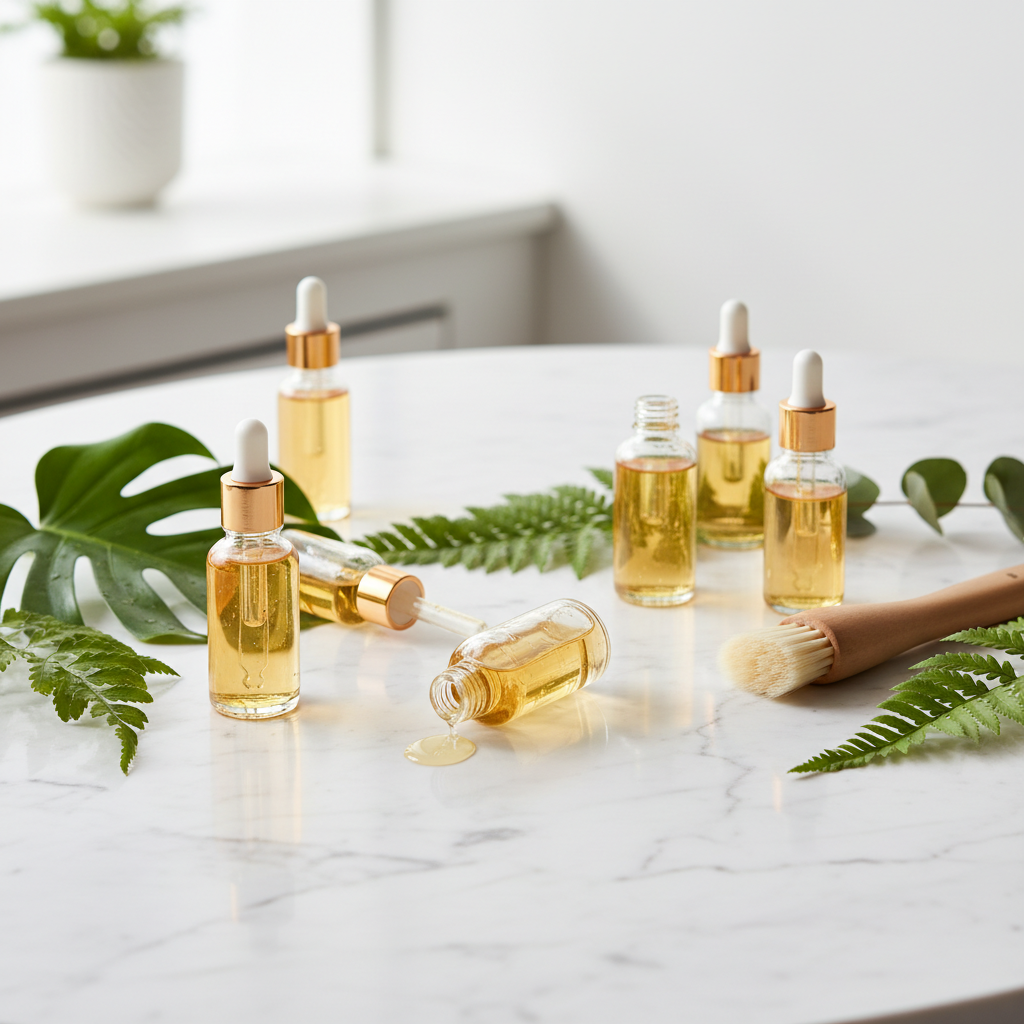
What castor oil does do, reliably and visibly, is condition existing hair. It coats the hair shaft, reduces breakage, and makes brows look fuller because every hair is slightly thickened with oil. People applying castor oil nightly to brows or lashes for four weeks usually notice an improvement, but the improvement is in the appearance of hairs they already had, not in the count of new ones. A few drops of Shop organic cold pressed castor oil applied with a clean spoolie nightly delivers the conditioning effect that people report.
Can Castor Oil Balance Hormones or Shrink Fibroids?
There is no published evidence that castor oil balances hormones or shrinks fibroids. Both claims circulate widely on TikTok, often presented as ancient knowledge or as something practitioners have observed clinically, but neither has been demonstrated in a clinical trial. The mechanism proposed (that castor oil packs increase lymphatic drainage in the pelvic region, which somehow modulates oestrogen metabolism) is speculative and has no peer reviewed support.
Fibroids are sensitive to oestrogen and respond clinically to either hormonal treatment, GnRH agonists, uterine artery embolisation, or surgery. They do not respond to topical oil applied over the abdomen. If you are noticing genuine cycle disruption, our guide to the signs your hormones are imbalanced walks through the actual investigations and interventions that work.
Is Topical Castor Oil Safe to Use Daily?
Topical castor oil is generally well tolerated, but two cautions matter. Around 5 to 10% of users develop contact dermatitis with prolonged daily use of higher concentrations, particularly on the face. Always patch test a small amount on the inner forearm for 24 hours before integrating into a daily routine. Castor oil is also comedogenic on some skin types: it can clog pores and trigger breakouts when used overnight under makeup or moisturiser.
Internal castor oil is a different question entirely. As a stimulant laxative it works powerfully and should not be self administered without medical guidance. In pregnancy, internal castor oil has historically been used to induce labour at term but with significant nausea and uterine cramping; it should not be used in pregnancy without an obstetrician’s involvement, and topically on the abdomen it is best avoided in the first and second trimesters by precaution.
What Does the Evidence Actually Say About Castor Oil Benefits?
After clearing the noise, the evidence base for castor oil supports three modest claims and rejects most of the rest.
The supported claims: ricinoleic acid is a genuine topical anti inflammatory at the application site; castor oil softens and conditions skin and hair through occlusive emolliency; the warm pack ritual lowers cortisol and shifts the autonomic nervous system, an effect of the ritual rather than the oil specifically. The unsupported claims: liver detoxification, hormone balance, fibroid shrinking, ovarian cyst dissolution, lymphatic drainage in any meaningful systemic sense, fertility enhancement, weight loss. None have human clinical evidence.
The right way to think about castor oil is this: it is a legitimate traditional skincare ingredient with real local anti inflammatory and emollient properties, currently being marketed for systemic effects it does not have. Use it for what it actually does. Skip the rest. The same approach applies to most viral wellness ingredients, which is why we wrote about the difference between clean beauty marketing and chemical beauty reality.
How to Use Castor Oil if You Want to Try It
For brows and lashes: a few drops of cold pressed organic oil applied with a clean spoolie nightly. Expect visible conditioning improvement within four weeks. Stop if any irritation appears.
For dry patches, scars, or stretch marks: massage a small amount into the area twice daily. The emollient effect is real and the risk of harm is low.
For an abdominal pack ritual: warm the oil slightly, soak a piece of organic cotton flannel, lay over the abdomen, cover, place a hot water bottle on top, lie down for 30 to 60 minutes. Three to four times per week. Be honest with yourself about why: the ritual is good for stress, the oil is good locally, neither detoxes your liver. A reusable Shop organic cotton castor oil pack kit saves the faff of wrapping cling film over a tea towel each time.
The premium pick is Shop Heritage Store Organic Cold Pressed Castor Oil , sold in glass to avoid the leaching that can happen with thicker oils in plastic. The UK value alternative, also organic and cold pressed, is Shop Naissance Organic Castor Oil .
If you want to move beyond topical fixes and build skin quality from the inside, the Collagen Protocol covers the oral supplements, doses and combinations that actually shift skin structure over time. Unlock it free.
Castor oil is useful for what it actually does. The rest is folklore wearing the costume of science.
Frequently Asked Questions About Castor Oil
Do castor oil packs detox the liver?
No. There is no published peer reviewed evidence that castor oil is absorbed through the skin in any meaningful quantity, and none that it travels to the liver and binds toxins for excretion. The liver detoxifies on its own and does not require a topical oil to function. What castor oil packs may genuinely do is reduce stress through the ritual of lying still with warmth, which lowers cortisol and shifts the nervous system into a parasympathetic state. If liver support is your goal, our TUDCA guide covers a bile acid with actual clinical trial evidence.
Does castor oil grow hair, eyebrows, or eyelashes?
There is no human clinical trial demonstrating that castor oil grows new hair. The claim rests on a single in vitro study suggesting ricinoleic acid may inhibit a molecule linked to hair loss, but no follow up trial in humans has confirmed this. What castor oil reliably does is condition existing hair by coating the shaft, reducing breakage, and making brows look fuller because each hair is slightly thickened with oil.
Can castor oil balance hormones or shrink fibroids?
No published evidence supports either claim. The proposed mechanism, that castor oil packs increase lymphatic drainage in the pelvic region and somehow modulate oestrogen metabolism, is speculative and has no peer reviewed support. Fibroids respond to hormonal treatment, GnRH agonists, uterine artery embolisation, or surgery. If you are experiencing cycle disruption, our guide on the signs your hormones are imbalanced covers the investigations and interventions that work.
Is castor oil safe to use on the face every day?
Topical castor oil is generally well tolerated, but around 5 to 10% of users develop contact dermatitis with prolonged daily use at higher concentrations, particularly on the face. It is also comedogenic on some skin types and can clog pores when used overnight under makeup or moisturiser. Always patch test a small amount on the inner forearm for 24 hours before integrating into a daily routine.
What does the evidence actually support castor oil for?
Three modest claims hold up. Ricinoleic acid is a genuine topical anti inflammatory at the application site. Castor oil softens and conditions skin and hair through occlusive emolliency. And the warm pack ritual lowers cortisol and shifts the autonomic nervous system, though this is an effect of the ritual rather than the oil specifically. Everything else, liver detox, hormone balance, fibroid shrinking, fertility enhancement, weight loss, lacks human clinical evidence.
Can you take castor oil internally?
Internal castor oil is a powerful stimulant laxative and should not be self administered without medical guidance, and never daily. In pregnancy, internal castor oil has historically been used to induce labour at term but with significant nausea and uterine cramping, and should not be used without an obstetrician’s involvement. The current wellness revival is focused almost entirely on topical use, which is the safer application.
How should you use castor oil for the best results?
For brows and lashes, apply a few drops of cold pressed organic oil with a clean spoolie nightly and expect conditioning improvement within four weeks. For dry patches, scars, or stretch marks, massage a small amount into the area twice daily. For an abdominal pack, soak organic cotton flannel in warmed oil, lay over the abdomen with a hot water bottle on top, and lie down for 30 to 60 minutes, three to four times per week. Be honest about the purpose: the ritual is good for stress, the oil is good locally.
How does castor oil compare to other viral skincare ingredients?
Castor oil is a legitimate traditional skincare ingredient with real local anti inflammatory and emollient properties, but it is currently being marketed for systemic effects it does not have. The same pattern applies to many viral wellness ingredients. Our review of clean beauty versus chemical beauty and our look at the GHK Cu peptide apply the same evidence based approach to separating what works from what does not.
Frequently Asked Questions
Do castor oil packs really detox the liver?
No, castor oil packs do not detox the liver in any clinically meaningful sense. The liver is the body's detox organ; it does not require a topical oil to function. The warmth and the pause that the ritual involves may reduce stress and improve perceived wellbeing, which has its own value. The mechanism people describe online, of castor oil somehow being absorbed and pulling toxins from the liver, has no published evidence behind it.
Does castor oil grow hair, eyebrows, or eyelashes?
There is no human clinical trial showing castor oil grows hair, eyebrows, or eyelashes. The claim rests on a single in vitro study suggesting ricinoleic acid in castor oil may inhibit a molecule linked to hair loss. People who use castor oil and notice fuller looking brows are usually seeing the result of conditioning and lubrication making existing hairs lie better, not new growth.
How long does it take for castor oil to work?
For the genuine effects (skin barrier softening, mild anti inflammatory action at the application site, lubrication of brows and lashes) results are usually visible within two to four weeks of daily use. For the unsupported claims (liver detox, hormone balance, fibroid shrinking) there is no honest answer, because the underlying effect has not been demonstrated.
Is it safe to use castor oil every day?
Topical castor oil is well tolerated for most people in daily use, though some develop contact dermatitis at higher concentrations. Always patch test on the inner forearm for 24 hours before regular use. Internal castor oil is a strong stimulant laxative; it should not be taken without medical guidance, and never daily.
How to Read Wellness
The book that taught us how to read every supplement label, clinical trial, and viral wellness claim. £24 paperback, printed to order.
Buy the bookProducts mentioned in this guide
Affiliate Disclosure
Some links in this guide are affiliate links, if you buy something we recommend, Sable + Sand may earn a small commission at no cost to you. We only recommend products we would genuinely use, and all editorial decisions remain entirely independent.